Trees 4 Sustainability: A shared solution for a shared problem

TREES 4 SUSTAINABILITY – Nourishing Trees for Nurturing Nature is a unique tree planting and forest landscape restoration program that aims to promote sustainable forest management through public-private-community partnership. By adopting a tree to be nourished until it attains its sustainability, you can now contribute and participate in a nation-wide greening and forest conservation program. Geared towards achieving sustainable development goals, it endeavors contributing to lessening the adverse impacts of climate change, water and watershed conservation, biodiversity protection, and revitalizing forestry industries that provide inclusive growth.  Administered by the Philippine Center for Environmental Protection and Sustainable Development, Inc., in partnership with various cause-oriented organizations, governments, and private sectors, a tree nourishing program has been launched to reforest selected sites and forest parks through contribution of donors and patrons of trees with a guaranteed success of survival through the issuance of Tree Certificates with proper identification and geo-tags of the tree being adopted.  Why Adopt A Tree?  The Philippines ranks 3rd among the most climate-vulnerable countries in the world where we are prone to adverse effects of climate change.  Among the major causes of climate change is the rapidly increasing amount of greenhouse gases in the atmosphere, which is caused by several activities such as burning of fossil fuels and deforestation among others. With the reduction of forest cover that could have absorbed the greenhouse gas, climate crisis is heightened. As of 2015, the total forest cover recorded is 7 M hectares from the 15 M hectares declared forestland. Despite the growth, this still pales in comparison to the country’s forest cover more than a century ago reaching up to 21 M hectares or 70% of the total land area. Such climate hazards can be minimized by restoring forest landscape through sustainable tree planting program that will serve as carbon storage and enhance the water holding capacity of forest ecosystem such as the Marikina watershed. Photo: Ohio Sea Grant Forests as Carbon Sink  From a global temperature of 0.40°C in 2000, the Earth’s global temperature has risen to 0.98°C in 2016, affecting many life forms and natural resources in the planet. In fact, experts from the UN Interpanel on Climate Change  (IPCC) claims that we only have until 2030 before we reach the 1.5 degree C temperature increase. By such time, extreme weather occurrences are inevitable. Among the many contribution in global warming is CO2 which acts as a blanket that traps heat in the world. Last year as much as 37,100,000,000,000 kg of CO2 was released into the atmosphere.  Fortunately, there are ways to reduce the excessive CO2 in the atmosphere. By just nurturing one tree, as much as 17 kg of carbon a year is captured from the atmosphere. If allowed to mature until 40 years old, a single tree has the capacity to sequester as much as 1,000 kg of carbon. Further studies of IPCC reveals that around 50% of the carbon is stored in plant and animal material and 50% in the soil. Amazingly, forests have the potential to absorb approximately 2.6 billion tonnes of CO2 each year, the emissions of which are released from burning fossil fuels, which is an activity usually done by man. By planting more trees and creating more forest cover, climate stability is supported, and more oxygen will be released into our atmosphere, which balances the dramatic amount of greenhouse gases already present.      Forests as Watershed  Maintaining our forests is crucial for maximizing water yield, regulating seasonal flows and ensuring high water quality. Without our forests, it is highly possible that we would experience worse flash floods, soil erosion and more frequent water interruptions. From a global perspective, it is estimated that by 2025, 1.8 billion people will be living in areas with absolute water scarcity, with ⅔ of the world’s population possibly experiencing water-stressed conditions.  On the flip side, by acting as a reservoir, forests protect communities by holding down the soil and absorbing most of the water when it rains. The effects of reduced forest protection over the years was evident during the onslaught of the tropical depression Ondoy in 2009. Without the protection of forests, the tropical depression had dumped as much as 23 meters of rain — that is as high as an 8-storey building, over a 24-hour period which had also claimed the lives of much as 710 people. Proper forest management and tree nourishing activities can then be beneficial to the surrounding community and to the environment by providing cities with drinking water. It can also help reduce water-related risks such as landslides, local floods and droughts. Forests as Home for Land Biodiversity and Natural Heritage The forest is the most biodiverse ecosystem on land. In fact, as much as 80% of terrestrial plants and animals live in the forests. In the Philippines, forests are also important for religious and cultural practices. Specifically in Ifugao, cutting of century-old trees are discouraged because it is believed that the spirit of their ancestors linger in them. This enables the forest to perform its ecological functions such as water conservation, as the spillover of water is received by farms and allows communities to have a stable food source and livelihood.  Moreover, the Philippines is among the 17 mega diverse countries containing two-thirds of earth’s life. Of the more than 50,000 life forms identified, more than half are found nowhere else in the world but in the Philippines. The many plants and animals that call the Philippines home is evident; this includes the Philippine Eagle (Pithecophaga jefferyi), the world’s largest eagle species known for its loyalty to its spouse.  Forests as a Source of Livelihood  Due to the Philippines’ extensive lands and rich soil, an upsurge of tree population is extremely beneficial for the State’s fast growing economy. In fact, agroforestry and its resources roughly accounted for 10.76% of the Philippine’s GDP on the last quarter of 2018, raking in Php 183 billion in the Agriculture and Forestry sector and Php 619 million in the Industry Sector. In spite …

Members of NGB-PFCS and TC78 goes to Timber Corridor of the Philippines

Group photo of the members of the NGB-PFCS and TC 78 as the Exposure Trip Participant. Photo © Jouelle Nerveza / PCEPSDI An Exposure Trip: Members of the Interim National Governing Board of Philippine Forest Certification System (NGB-PFCS), and Bureau of Philippine Standards (BPS) Technical Committee (TC) 78 goes to the Timber Corridor of the Philippines A two-day learning Exposure Trip in the CARAGA Region for the “Providing Capacity Building project” took place on April 10-12, 2019 for the members of the Interim National Governing Board of Philippine Forest Certification System (NGB-PFCS), and Department of Trade and Industry – Bureau of Philippine Standards (DTI-BPS) Technical Committee on Forest and Forest Products (TC 78). This trip to the timber value chain process aims to exhibit the operations and production in upstream level to the stakeholders of wood value chain. Chairman Ermito Minerva of Balungagan Farmers Association, Inc. (BAFA) sharing issues and concerns on their tree farm.  Photo © Jouelle Nerveza / PCEPSDI The first highlight of the trip is the Balungagan Farmers Association, Inc. (BAFA) wherein the members of NGB-PFCS and TC 78 was accommodated by the BAFA Chairman Ermito Minerva. The exposure trip has helped BAFA to share their issues and concern on their tree farm production of Falcata. Chairman Minerva also toured the participants to the tree plantation as he shared how the trees are grown, harvested and shipped to sawmills. Chairman Jaime Oclaret of Ibuan Agro Forestry Farmers, Inc. (IBAFA) sharing the inclusive growth through the rubber tree plantation. Photo © Jouelle Nerveza / PCEPSDI The second stop of the exposure trip is the rubber tree plantation of Ibuan Agro Forestry Farmers, Inc. (IBAFA). Chairman Jaime Oclaret discussed the inclusive economic growth of their association through the plantation. He also shared the issues and concerns of the association. After the orientation and the interview of the participants, Chairman Oclaret brought the participants to the plantation wherein he showed the rubber trees and the harvesting of rubber saps. Women in action at Orgon Plywood Industry. Photo © Jouelle Nerveza  / PCEPSDI The last site of the trip is in a plywood manufacturer in Agusan Del Norte, the Orgon Wood Industry. Before the visit, Engr. Napoleon Mordeno, Plant Manager conducted a short briefing on the basic operation of plywood production and he also answered queries from the members of the NGB-PFCS and TC 78. As the participants toured the plant, it was observed that the production has provided an opportunity for women in plywood manufacturing. Group photo with Director Nonito Tamayo of Forest Management Bureau-Department of Environment and Natural Resources (FMB-DENR) (1st row 3rd from the left). Photo © Jouelle Nerveza  / PCEPSDI Before the trip has ended, the members of the NGB-PFCS and TC 78 had the opportunity to sit with the Director of the Forest Management Bureau of the Department of Environment and Natural Resources (FMB-DENR), Dir. Nonito Tamayo and former DENR Undersecretary Mendoza. Challenges, struggles and next steps has been proposed on forest certification and chain of custody for the stakeholders of the industry. The exposure trip is made possible through a project of PCEPSDI in partnership with FAO under the assistance of EU FEGT Programme. The project aims to provide capacity building for the members of the NGB-PFCS for forest certification and TC 78 for the standards on chain of custody. To know more about the project you can check our website or email us at forestcertification@pcepsdi.org.ph

Policy Planning Workshop with the Cebu City Local Government Unit

The Sustainable Diner project team of WWF-Philippines and PCEPSDI with representatives from the Cebu City LGU’s various offices: Tourism; Health; Planning; Public Information; Budget;  Agriculture; Environment and Natural Resources; and Resource Management and Development Center. Photo © Gabriel Villalon / WWF-Philippines World Wide Fund for Nature (WWF) Philippines’ The Sustainable Diner: A Key Ingredient for Sustainable Tourism project conducted a policy planning workshop in partnership with the Philippine Center for Environmental Protection and Sustainable Development, Inc. (PCEPSDI) and the Cebu City Local Government Unit (LGU) at the Social Hall of the Cebu City Hall last March 4, 2019. The workshop was attended by representatives from the LGU’s Resource Management and Development Center and the Tourism; Health; Planning; Public Information; Budget; Agriculture; and Environment and Natural Resources offices. The goal of the workshop was to validate the action recommendations and strategies derived from the Action Planning Workshop conducted last year in order to assist the LGU in integrating the Sustainable Consumption and Production (SCP) concept into their policies and plans and identifying key departments or units instrumental in handling each recommended strategic action. Ms. Diana Sadili, PCEPSDI’s Project Officer for The Sustainable Diner project, facilitating the exchange of recommendations amongst representatives from the Cebu City LGU’s different offices.  Photo © Gabriel Villalon / WWF-Philippines Ms. Diana Sadili, PCEPSDI’s Project Officer for The Sustainable Diner project, set the expectations for the policy planning workshop by giving a quick run-through on the project action recommendations and strategies, consolidated from the inputs gathered from the Action Planning Workshop held last September 24-25, 2018. The Action Planning Workshop was meant to define the medium- and long-term strategic goals of specific national and local government units on the implementation of SCP in the food service industry, and to integrate SCP principles into local and national policies and plans. The gathered recommendations and strategies were classified under four (4) major themes: the creation of an SCP council; the institutionalization and harmonization of SCP concepts; the adoption and implementation of SCP practices and policies; and the development of a support system for the food service industry’s transition to SCP compliance. Ms. Liezl Stuart Del Rosario, The Sustainable Diner project’s Policy Specialist, facilitating the workshop on solid waste management, particularly on the management of single-use plastics.  Photo © Gabriel Villalon / WWF-Philippines With Cebu City being situated in an island that is surrounded by rich marine biodiversity and blessed with different forms of natural resources, environmental protection became a very important theme during the policy planning workshop. Giving a specific importance to this lens, the presented action recommendations and strategies were then assessed by the Cebu City LGU representatives, particularly on how these can be improved and implemented through local policy-making and governance. During the workshop proper, the Cebu City LGU representatives were able to localize the consolidated challenges and opportunities shared during the Action Planning Workshop by stakeholders from the food service industry, the academe, and other civil society organizations, with the present challenges they are facing in the different aspects of local governance. The action recommendations and strategies were then further refined, and collectively, suggestions were made on the possible delegation of the roles and responsibilities to the corresponding LGU offices.  Ms. Aireen Monica Guzman, Sanitation Inspector I from the Cebu City Health Department, presenting the discussion highlights concerning the protection of natural resources in Cebu City.  Photo © Gabriel Villalon / WWF-Philippines The outcome of the policy planning workshop will be further synthesized until a revised batch of action recommendations and strategies, specifically for Cebu City, can be presented and implemented with the help of the LGU’s different offices. Having concluded the policy planning workshops for Quezon City and Cebu City, the same kind of workshop will be conducted in Tagaytay City in the coming month.   The Sustainable Diner project, under WWF-Philippines’ Sustainable Consumption and Production, is part of the International Climate Initiative (IKI). The Federal Ministry for the Environment, Nature Conservation, and Nuclear Safety (BMU) supports this initiative on the basis of a decision adopted by the German Bundestag.

Sustainable Tourism Initiatives in the 10th PLLENRO National Convention

Guest Speakers with the participants of the 10th Philippine League of Local Environment and Natural Resources Officer (PLLENRO) National Convention. Photo © Jouelle Nerveza / PCEPSDI The Philippine Center for Environmental Protection and Sustainable Development, Inc. (PCEPSDI), as a pioneer organization in advocating Sustainable Consumption and Production (SCP) in the country, contributed to the 10th National Convention of the Philippine League of Local Environment and Natural Resources Officer (PLLENRO), held at the CityState Asturias Hotel in Puerto Princesa City, Palawan. The convention was attended by Environment and Natural Resources Officers (ENROs) from different local government units in the Philippines. PCEPSDI had the opportunity to organize a one-day programme on March 1, 2019 for the convention highlighting sustainability in the tourism industry in partnership with PLLENRO. It included current initiatives in the country in the promotion of Sustainable Consumption and Production (SCP), understanding the environmental footprint of the accommodation sector, as well as actual application of innovative solutions as a core business practice. Ms. Jane Dela Rosa of the National Economic Development Authority (NEDA) also graced the event and presented NEDA’s initiatives on strengthening SCP in the Philippines. PCEPSDI Executive Director June Alvarez discussing Green Choice Philippines as an ISO 14024 Application. Photo © Jouelle Nerveza / PCEPSDI PCEPSDI Executive June Alvarez discussed Green Choice Philippines as an ISO 14024 application in the forefront of promoting SCP in the Philippines. Green Choice Philippines is an ecolabelling scheme that follows the guidelines and procedure of ISO 14024 and it aims to communicate that consumers can put trust on labels. The programme also include the existing projects of the organization in the promotion of sustainable tourism. PCEPSDI Project Officer Kiko Velhagen discussed the pilot project on Transforming Tourism Value Chains. A project in partnership with the United Nations Environment Programme (UNEP) and the Department of Tourism (DOT), the Transforming Tourism project aims to reduce greenhouse gas emissions and promote resource efficiency in the Hotel and Meetings, Incentives, Conventions & Exhibitions (MICE) sector. PCEPSDI Project Officer Diana Sadili also shared the results of the Life Cycle Study conducted for Food Services. The study is part of PCEPSDI’s technical assistance to the Sustainable Diner Project: A Key Ingredient for Sustainable Tourism, which was also presented at the event by WWF Philippines’ Project Manager Melody Melo-Rijk. Mr. Neil Rumbaoa of SM Hotels and Conventions Corporation (SMHCC) and Mr. Robert Llamas of Quanta Paper Corporation also shared their respective companies’ initiatives on Sustainability. SMHCC being a partner on Transforming Tourism Value Chains Project and Quanta Paper Corporation as an awarded Green Choice Product. Awarding of certificates to the speakers with PLLENRO Officials. Photo © Jouelle Nerveza / PCEPSDI Through this event, PCEPSDI and PLLENRO has reaffirmed the organizations’ partnership in the promotion of Sustainable Consumption and Production. To know more about the initiative on sustainable development, please visit our website at www.pcepsdi.org.ph.

PCEPSDI and WWF-Philippines conduct Policy Planning Workshop with the Quezon City LGU

PCEPSDI and WWF-Philippines conduct Policy Planning Workshop with the Quezon City Local Government Unit Photo © Alexa Jeanne Lasch / WWF-Philippines The Sustainable Diner project team of WWF-Philippines and PCEPSDI with representatives from the Quezon City LGU’s Tourism, Health, Planning, and Environmental Protection and Waste Management Departments.   World Wide Fund for Nature (WWF) Philippines in partnership with the Philippine Center for Environmental Protection and Sustainable Development, Inc. (PCEPSDI), The Sustainable Diner: A Key Ingredient for Sustainable Tourism project conducted a policy planning workshop together with the Quezon City Local Government Unit (LGU) last January 24, 2019 at the Quezon City Hall. The workshop was attended by representatives from the LGU’s Tourism, Health, City Planning, and Environmental Protection and Waste Management Departments, with the goal of validating action recommendations and strategies from the recently-concluded project Action Planning Workshop, assisting the LGU in the integration of the Sustainable Consumption and Production (SCP) concept into their policies and plans, and identifying specific departments or units that will be assigned to handle each recommended strategic action.   Photo © Pauline Abello  / PCEPSDI Ms. Diana Sadili, PCEPSDI’s Project Officer for The Sustainable Diner project, opens the workshop with a presentation consolidating the challenges being faced when promoting the SCP concept in the country.   Ms. Diana Sadili, PCEPSDI’s Project Officer for The Sustainable Diner project, set the background of the policy planning workshop by presenting project action recommendations and strategies, consolidated the inputs gathered from the Action Planning Workshop held last September 24-25, 2018. The aim of the Action Planning Workshop was to define the medium- and long-term strategic goals of select national and local government units on the implementation of SCP in the food service industry, and to integrate SCP principles into local and national policies and plans. The gathered recommendations and strategies were classified under four major themes: the creation of an SCP council, the institutionalization and harmonization of SCP concepts, the adoption and implementation of SCP practices and policies, and the development of a support system for the food service industry’s transition to SCP compliance.   Photo © Pauline Abello / PCEPSDI Ms. Liezl Stuart Del Rosario, The Sustainable Diner Project’s Policy Specialist, discussing one of the consolidated strategies to the QC LGU representatives.   The presented action recommendations and strategies were then assessed by the QC LGU representatives, particularly on how these can be improved and implemented through the lens of local policy-making and governance. During the workshop proper, the QC LGU representatives were able to connect the consolidated challenges and opportunities, shared during the Action Planning Workshop by stakeholders from the food service industry, the academe, and other civil society organizations, with some of the challenges that they are facing as a part of the city’s local governing departments. They were able to further validate, enhance and localize the action recommendations and strategies, and followed it up with the assignment of roles and responsibilities to the concerned LGU departments.   Photo © Alexa Jeanne Lasch / WWF-Philippines Project team members from WWF and PCEPSDI facilitating the workshop proper where QC LGU representatives gave their comments on how the identified action recommendations and strategies can be improved.   The outcome of the policy planning workshop will be further synthesized until a revised batch of action recommendations and strategies, specifically for Quezon City, can be presented and implemented with the help of the LGU’s different departments. In the succeeding months, the same policy planning workshop will be conducted with the Tagaytay City LGU and the Cebu City LGU – The Sustainable Diner project’s other two key city partners.   The Sustainable Diner project, under WWF-Philippines’ Sustainable Consumption and Production, is part of the International Climate Initiative (IKI). The Federal Ministry for the Environment, Nature Conservation, and Nuclear Safety (BMU) supports this initiative on the basis of a decision adopted by the German Bundestag.

Action Planning Workshop for the Sustainable Diner Project Stakeholders

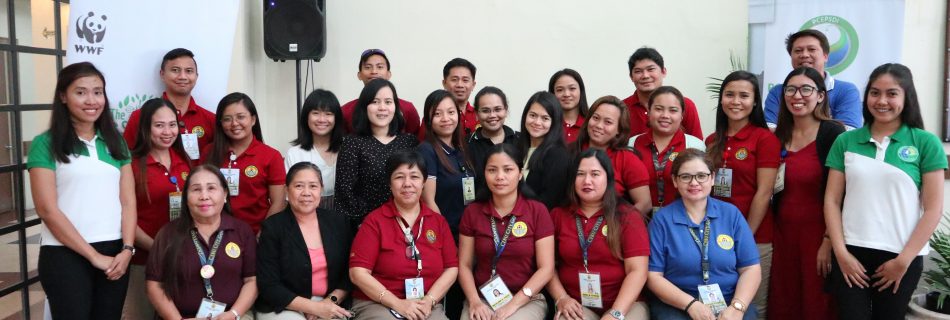
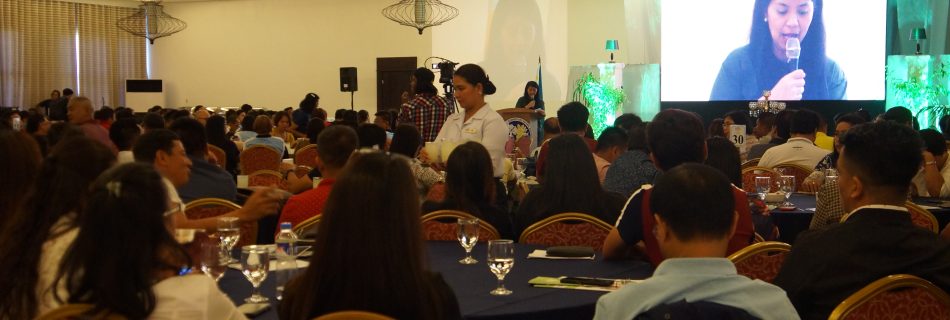
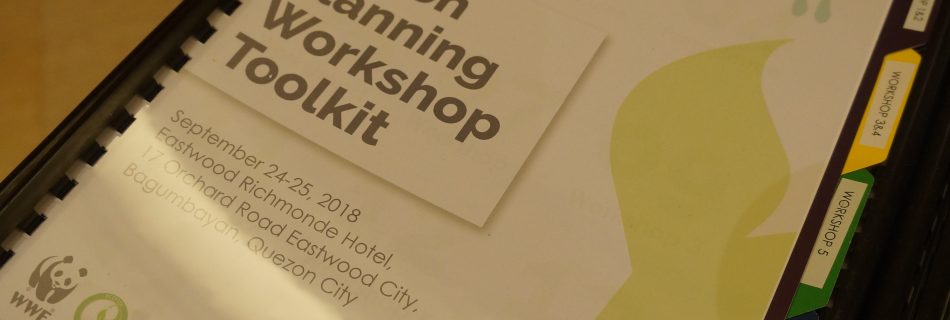
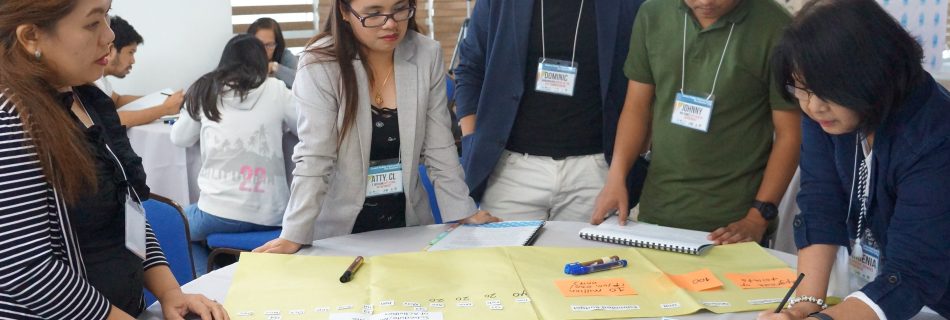
PCEPSDI and WWF conduct Action-Planning Workshop for the Sustainable Diner project stakeholders Photo © Pauline Abello / PCEPSDI The participants of the Action-Planning Workshop come from the government, both national and local, the food service industry, the academe, and civil society organisations. Last September 24 and 25, 2018, World Wide Fund for Nature (WWF) Philippines’ The Sustainable Diner: A Key Ingredient for Sustainable Tourism project, together with The Philippine Center for Environmental Protection and Sustainable Development, Inc. (PCEPSDI), conducted a two-day Action-Planning Workshop at the Eastwood Richmonde Hotel, Quezon City. Stakeholders from the national and local government, the food service industry, the academe, and other civil society organizations were gathered to determine processes and perspectives which affect the advancement of sustainable consumption and production (SCP) in the food service sector on both the national and local business levels. Photo © Gabriel Villalon / WWF-Philippines Diana Sadili, Project Officer of PCEPSDI, served as the host and moderator for the two-day workshop. The aims of the action-planning workshop were to define the long-term strategic goals of the select national and local government units on the implementation of SCP in the food service industry, to integrate SCP principles in local and national policies and plans, to help address the foreseen hurdles in the project implementation, and to identify opportunities and actions for successful implementation and integration of SCP in the operations of food service establishments nationwide. The workshop produced a draft action plan for the integration of SCP in the food service industry at the national and local business levels. Photo © Gabriel Villalon / WWF-Philippines The two-day action-planning workshop involved a lot of group discussions, where the participants were divided into four groups. Joshua Ladia, Project Officer of PCEPSDI, facilitated the exchange of ideas in one of the groups. The workshop was divided into seven activities, where participants were grouped for seamless discussion and exchange of ideas: Activity 1: Rapid Assessment of Sustainable Consumption and Production in the food service industry at the national and local government unit level Activity 2: Vision and Mission Setting on Advancing SCP in the food service industry Activity 3: Developing Strategic Objectives Activity 4: Developing the Scorecard Strategic Measures and Indicators Activity 5: Identifying and Prioritizing Strategic Actions Activity 6: Identifying and Analyzing Risks and Opportunities Activity 7: Identifying National and Local Policies and Plans to best integrate SCP in the food service industry Photo © Gabriel Villalon / WWF-Philippines  Dominic Diaz of the Hotel & Restaurant Association of the Philippines (HRAP) presented the finance-related risks and opportunities that his group identified and analyzed. Each activity ended with a presentation of group outputs, where the four groups were assigned a specific perspective to tackle: Learning and Growth, Financial, Stakeholders, and Process. The outputs per activity were collected to synthesize the results of the workshop and to come up with the draft action plan for SCP integration in the food service industry. Dr. Neric Acosta closed the workshop by sharing his thoughts on the success of the integration of SCP principles in the food service industry. “We cannot manage those that we cannot accurately measure. This kind of workshop is very important because it allows us to gather and measure data on total consumption, consumption patterns, consumption habits, as well as on the production side – where our food comes from, what kind of products restaurants are selling, which commodities are currently present in the food service industry. Add to that, the waste generated from both consumption and production. That’s a lot of quantitative and qualitative data we need to measure and analyze and if we cannot measure them, we cannot likely manage”, says Dr. Acosta. “When it comes to relating this to environmental protection, protection really comes from valuing, and valuing comes from understanding. You cannot protect that which you cannot first truly value. Together, this is what we, as project stakeholders, need to always remember when we start rolling out our interventions for the successful implementation of SCP in the local food service industry,” he added. Photo © Pauline Abello / PCEPSDI Dr. Neric Acosta, Chairperson of PCEPSDI, closed the workshop by sharing his thoughts on how SCP principles can be successfully integrated in local dining operations. The two-day workshop served its purpose as a dynamic and interactive gathering of key stakeholders involved in the successful implementation of SCP principles not just in the three partner cities of the project – Quezon City, Cebu City, and Tagaytay City – but in the entire country. It just goes to show that when the different sectors of society work together towards a common goal, it is possible to integrate sustainability in the local food service industry and also in all the industries relevant in our country’s economic and sustainable development. The Sustainable Diner project, under World Wide Fund for Nature (WWF) Philippines’ Sustainable Consumption and Production, is part of the International Climate Initiative (IKI). The Federal Ministry for the Environment, Nature Conservation, and Nuclear Safety (BMU) supports this initiative on the basis of a decision adopted by the German Bundestag.

GPP Task Force Completes the Advance Course Trainings for the GPP for Quezon City Project on August 9 & 10, 2018

Quezon City’s Green Public Procurement (GPP) Task Force Completes the Advance Course Trainings for the GPP for Quezon City Project – a 10YFP SPP Programme Photo © Pauline Abello /PCEPSDI PCEPSDI Executive Director Mr. June M. Alvarez and Programmes & Project Director Engr. Maureen Grace V. Lebria with the GPP Taskforce and GPP4QC Project Team Quezon City’s inter-department GPP Task Force has completed the last capacity building training towards green purchasing on a local government setting on August 9-10, 2018 held at St. Giles Classic Hotel. The GPP Taskforce was formed to implement the GPP4QC Project activities and to provide necessary information to deliver project results that can be replicated in other local government unit. The series of training for the GPP Taskforce aims to guide them through the discussions on factors affecting the deterioration of the environment, it’s ill impact to the community and what the Taskforce can do about it, being the core group of the Green Public Procurement (GPP) initiative of Quezon City. The GPP Taskforce have gone through awareness seminars, trainings and workshops that will help them reduce Greenhouse Gases (GHG) in line with the Quezon City’s commitment to Deadline 2020, a response to the C40 Cities to the Paris Agreement, it aims to reduce GHG emissions through low carbon projects. The four Advance Course Trainings was spearheaded by the Philippine Center for Environmental Protection and Sustainable Development, Inc. (PCEPSDI) in partnership with Quezon City Local Government through the Environmental Protection and Waste Management Department (EPWMD), co-implementers of the UN Environment 10 Year Framework of Programmes (10YFP) on Sustainable Consumption and Production (SCP) for Sustainable Public Procurement (SPP) Project entitled “Establishment of Green Public Procurement (GPP) for Quezon City fir the Promotion of Sustainable Consumption and Production (SCP) in the Philippines” dubbed as the GPP4QC Project. As the project targets to establish and implement a GPP Program in Quezon City and present the programme in an LGU setting. It also targets to develop a Policy Guideline and Framework, and to develop green products specification that can be used in purchasing products and contracting services for the local government. Following Quezon City’s priority, the policy guideline and framework is on-going and being reviewed by the Quezon City stakeholder. While the GPP4QC prioritized four products with the highest impact in terms of GHG reduction which includes food packaging, event, computers and laptops, and auto vehicles. The GPP4QC at its closing phase and the continuation of the Green Procurement Project for Quezon City lies on the hand of the GPP Taskforce. The Philippine Center for the Environmental Protection and Sustainable Development, Inc. (PCEPSDI) has offered assistance to the Taskforce on their GPP initiative even after the implementation of the GPP4QC Project. The organization hopes that even the project closes, the GPP initiatives’ achievement on the implementation of the GPP4QC Project will flourish and continue towards its purpose to promote green purchasing and Sustainable Consumption and Production (SCP) in the country. To know more about the Green Public Procurement (GPP) Updates please like our Facebook Page https://www.facebook.com/PCEPSDI/ and search for the #GPP4QC or message us at gpp4qc@gmail.com.  

Capacity Building for Quezon City Suppliers and Supply Chain

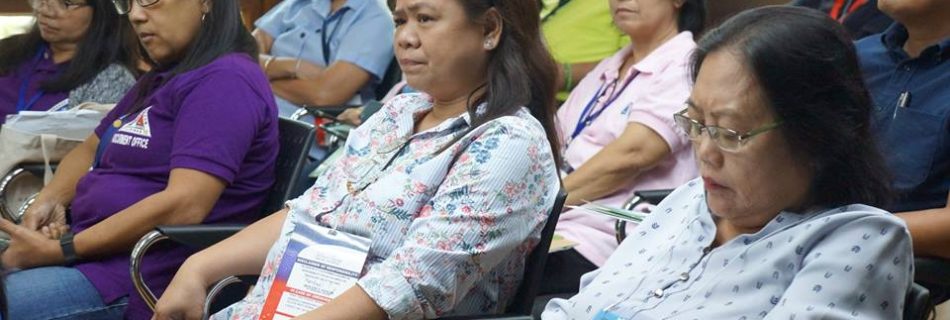
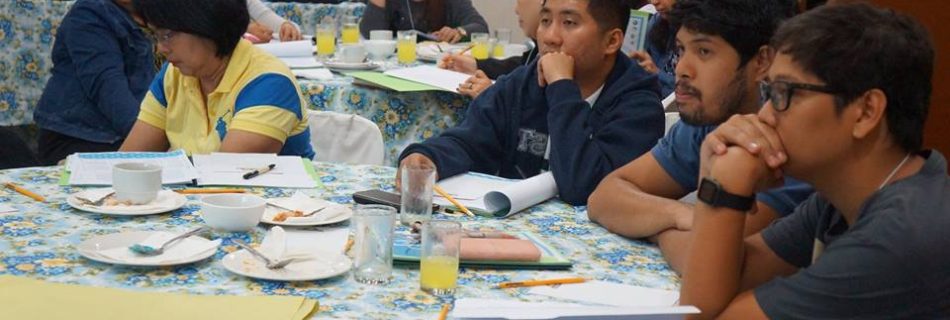
Capacity Building for Quezon City Suppliers and Supply Chain held on August 1, 2018 at the Quezon City Public Library Photo © Pauline Abello / PCEPSDI PCEPSDI Programmes & Projects Director Engr. Maureen Grace V. Lebria with the QC Suppliers and Supply Chain and GPP4QC Project Team. As Quezon City Stakeholders, the GPP Project held a Capacity Building Activity for their Suppliers and Supply Chain held on August 1, 2018. The Philippine Center for Environmental Protection and Sustainable Development, Inc. (PCEPSDI) recognizes the direct impact of Green Public Procurement (GPP) to Quezon City suppliers and supply chain’s role in the project, a capacity building activity was held to align them with the local government’s support unto the initiative. The activity includes an introduction on Sustainable Consumption and Production (SCP) and Green Public Procurement to make them further understand the relevance of the project to the government, community and the environment. The Green Procurement initiatives from the ASEAN region was also featured to align that there are already established programmes which are already in different levels. The event invited QC suppliers and supply chain of particular products from the following industry: food packaging, computers and laptops, events and motor vehicles. These products were based on the result of the product prioritization study. The selected products will help reduce Greenhouse Gases (GHG) in line with the Quezon City’s commitment to Deadline 2020, a response to the C40 Cities to the Paris Agreement, it aims to reduce GHG emissions through low carbon projects. It was also the chance to present the draft technical specification for environmentally friendly products to the stakeholders whose comments are valuable to the feasibility of the draft specification. The success of the event was made possible with the assistance of the General Procurement Office and the Environmental Protection and Waste Management Department (EPWMD), co-implementers of the UN Environment 10 Year Framework of Programmes (10YFP) on Sustainable Consumption and Production (SCP) for Sustainable Public Procurement (SPP) Project entitled “Establishment of Green Public Procurement (GPP) for Quezon City for the Promotion of Sustainable Consumption and Production (SCP) in the Philippines” dubbed as the GPP4QC Project. To know more about the Green Public Procurement (GPP) Updates please like our Facebook Page https://www.facebook.com/PCEPSDI/ and search for the #GPP4QC or message us at gpp4qc@gmail.com.

Capacity Building for Quezon City Department Heads

Photo © Pauline Abello / PCEPSDI PCEPSDI Programmes & Projects Director Engr. Maureen Grace V. Lebria with the QC Department Heads and GPP4QC Project Team. As the Green Public Procurement Project for Quezon City is at its implementation phase.  A Capacity Building activity for the Quezon City Department Heads was held on July 12, 2018. The activity aims to have the Department Heads be more involved and updated on the project’s status on the development of technical specification and draft guidelines and framework for green procurement. The activity includes a brief introduction on the concept of Sustainable Consumption and Production (SCP), and Green Public Procurement (GPP).   Quezon City has been always supportive with the Green Procurement initiative. In line with this, the QC inter-department GPP Task Force has been focused on the implementation of the project is as supportive as their department heads who attended the capacity building for green procurement. The event also featured to raise awareness on the green public procurement project for Quezon City. Another is to share that there are existing green procurement programmes in the ASEAN region to escalate the relevance of the project not just in a national level but in an international level. The success of the event was made possible through the assistance of the partnership of the Philippine Center for Environmental Protection and Sustainable Development, Inc. (PCEPSDI) with Quezon City Local Government through the Environmental Protection and Waste Management Department (EPWMD), co-implementers of the UN Environment 10 Year Framework of Programmes (10YFP) on Sustainable Consumption and Production (SCP) for Sustainable Public Procurement (SPP) Project entitled “Establishment of Green Public Procurement (GPP) for Quezon City for the Promotion of Sustainable Consumption and Production (SCP) in the Philippines” dubbed as the GPP4QC Project. To know more about the Green Public Procurement (GPP) Updates please like our Facebook Page https://www.facebook.com/PCEPSDI/ and search for the #GPP4QC or message us at gpp4qc@gmail.com.

Advancing Sustainable Consumption and Production (SCP) on Dining and Purchasing Conference

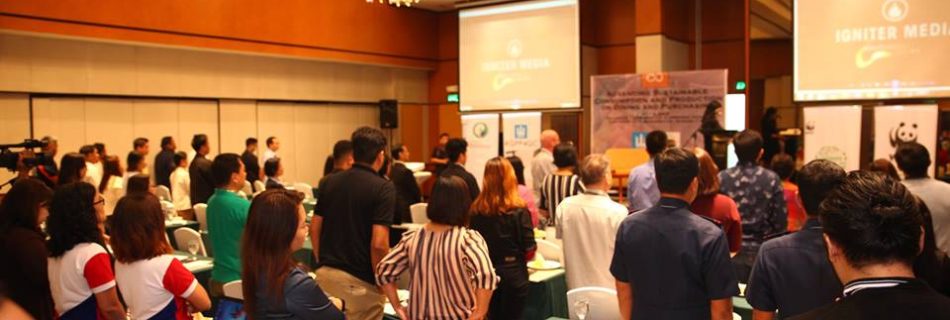
QC Vice Mayor Josefina “Joy” Belmonte delivers the Keynote Address at the Advancing Sustainable Consumption and Production (SCP) on Dining and Purchasing The first Sustainable Consumption and Production (SCP) on Dining and Purchasing Conference was held on July 4, 2018. This event was a conference in partnership with the Green Public Procurement (GPP) Project for Quezon City implemented by the Philippine Center for Environmental Protection and Sustainable Development, Inc. (PCEPSDI) and the Sustainable Diner Project: A Key Ingredient to Sustainable Tourism spearheaded by WWF-Philippines and PCEPSDI. The event focuses on the establishment and integration of Sustainable Consumption and Production (SCP) on the dining and purchasing scenario in the Philippines through the parallel afternoon session on policy dialogue and information session. Atty. Digo (GPPB) and Engr. Lozano (DBM-PS) with the PCEPSDI GPP4QC Team and QC Stakeholders at the GPP4QC Information Session The GPP Project for Quezon City focuses on establishing the SCP initiatives in the operation and system of their stakeholders specifically the barangay officials and national government agencies residing in QC. The invitation was also extended to other local units around Quezon City. Atty. Jerry Digo of the Government Procurement Policy Board (GPPB) and Engr. Julieta Lozano of the Department of Budget and Management – Procurement Service (DBM-PS) discussed the status of Green Procurement in the government. Atty. Digo presented the Green Public Procurement Roadmap and Engr. Lozano shared the GPP implementation in the procurement of 10 common use supplies and equipment in the government. The Sustainable Diner Project’s Policy Dialogue While the Sustainable Diner Project focuses on gathering insights on the advancement of SCP and policy recommendations in the food service industry. A policy dialogue has been conducted with the Food Service Sector stakeholders. To know more about the projects of the Philippine Center for Environmental Protection and Sustainable Development, Inc. (PCEPSDI) kindly send an e-mail at greenchoicephilippines@pcepsdi.org.ph or all us at 631-2151 or 727-5787.

3rd Advance Course Training for Quezon City GPP Task Force

The Green Public Procurement (GPP) for Quezon City (QC) held its 3rd Advance Course Training for QC’s inter-department GPP Task Force on June 21-22, 2018 at Days Hotel, Tagaytay. PCEPSDI Executive Director Mr. June M. Alvarez and Programmes & Project Director Engr. Maureen Grace V. Lebria with the GPP Taskforce and GPP4QC Project Team The 3rd Advance Course Training for the Green Public Procurement (GPP) Taskforce was finally held on June 21-22, 2018 at Days Hotel Tagaytay. The Advance Course Training was programmed for the GPP Task Force to know more about the technical aspect of the GPP for QC project. This include the presentation of product prioritization result, strategic planning, development of technical specification for environmentally friendly criteria, drafting a policy framework and guideline, and the upcoming activities as the project is at its closing phase. The GPP Task Force had a look back on their responsibilities as stated on Office Order No. 57 Series of 2012, a resolution creating the Green Public Procurement Team to monitor and supervise the GPP Project of Quezon City. This is in preparation for their monitoring strategy when the project has finally closed and if they have decided to fully implement the Green Public Procurement in Quezon City. Photo © Pauline Abello / PCEPSDI Ms. Sandee Recabar of Climate Change Commission on the opportunities of GHG Mitigation on Green Procurement One of the training’s highlight is when Ms. Sandee Recabar of the Climate Change Commission has presented the opportunities of Greenhouse Gas (GHG) mitigation on Green Procurement. Another is the workshop on drafting a technical specification for a product using life cycle considerations. The GPP Taskforce was able to identify criteria with specific means of verification and relevance to the product itself and in the environment. The workshop was meant to have them experience the basic process of drafting a technical specification which is deemed important being a scientific process of addressing and considering the environment on their procurement processes. The Advance Course Trainings was spearheaded by the Philippine Center for Environmental Protection and Sustainable Development, Inc. (PCEPSDI) in partnership with Quezon City Local Government through the Environmental Protection and Waste Management Department (EPWMD), co-implementers of the UN Environment 10 Year Framework of Programmes (10YFP) on Sustainable Consumption and Production (SCP) for Sustainable Public Procurement (SPP) Project entitled “Establishment of Green Public Procurement (GPP) for Quezon City for the Promotion of Sustainable Consumption and Production (SCP) in the Philippines” dubbed as the GPP4QC Project. To know more about the Green Public Procurement (GPP) Updates please like our Facebook Page https://www.facebook.com/PCEPSDI/ and search for the #GPP4QC or message us at gpp4qc@gmail.com.

DOT’s 4-year project Transforming Tourism Value Chain holds Workshop 3 on May 30-31, 2018

With Boracay finally shutting down for a six months moratorium period due to continuous environmental degradation, thus affecting one of the country’s key sources of tourism revenues, the Department of Tourism (DOT) steps up to develop a roadmap for advancing sustainable tourism in the country, by assisting the tourism sector shift to resource use efficiency and increase their cost savings, while decoupling tourism growth from carbon emissions. Through DOT’s four-year project ‘Transforming Tourism Value Chains (TVC) to Accelerate More Resource Efficient, Low Carbon Development, in partnership with the Paris-based UN Environment Programme (UNEP), a sound agenda for sustainable tourism and low-carbon growth will be developed through a series of workshops for the tourism value chain.                                                                                                                                           Usec. Marco Bautista of the Department of Tourism “Sustainable Tourism should pave the way for a more environmentally-responsible Accommodation and MICE sector in the country, in response to climate change adversities and the challenge for a more competitive and resilient tourism industry, under the new National Tourism Development Plan 2016-2022,” said the newly-appointed DOT Under Secretary Marco Bautista during the opening of the 3rd Workshop of the project. Group Picture of Day 1 Participants to Workshop 3 of the Tourism Value Chain Project Group Picture of Day 2 Participants to Workshop 3 of the Tourism Value Chain Project Held last May 30-31, the 3rd project workshop was participated by hotel and resort owners and managers, its supply chain, tourism operators and researchers, NGO, sustainable tourism advocates, LGU tourism and environment officers, as well as MICE organizers. Highlighting this workshop is the presentation of the Greenhouse Gas Abatement Cost Model (GACMO), an essential tool for the Accommodation and MICE sector to shift to more sustainable, resilient and competitive business. Earlier, the first and second project workshops came up with Philippine tourism value chain mapping, tourism hotspots analyses and short listing of solutions, with Iloilo and Metro Manila as project areas. These workshop results will be used as inputs for the National Sustainable Tourism Roadmap. Organized by DOT’s project partner Philippine Center for Environmental Protection and Sustainable Development Inc (PCEPSDI), the workshop highlighted the discussion on how the government, business, and civil society can collaborate and create a favourable context for collective action in improving the sustainability of the Tourism value chain in the Philippines. Participants also actively contributed inputs to the Low Carbon and Resource Efficiency Roadmap in the Philippines, which will be implemented in the following years of the project. The workshop likewise collated how businesses could evaluate, compare, and select options to improve their environmental performance and reduce Climate Change related emissions. Technical Consultant Jorgen Villy Fehann of the UN Environment-University of Denmark Partnership reiterated the need for tourism entities in the Philippines to join the Global action on climate change, through its Intended Nationally Determined Contributions (INDCs). From left right, Mr. Kiko Velhagen of PCEPSDI, Dr. Alvin Culaba of De La Salle University, Jorgen Villy Fehann of the UN Environment Programme-Denmark Technical University Partnership (UNEP-DTU), Mr. June Alvarez PCEPSDI Executive Director, Pablo Montes of UNEP, Mark Barthel and Claire Kneller from Waste and Resources Action Programme (WRAP). UN Environment representative Pablo Montes said, “Tourism industry in the Philippines is one that has been a lot of progress in the topics that we covered during the workshop mainly, and with this Sustainable Tourism, how to address climate change, how to mitigate climate change emissions, and how to be more resource efficient. There is a strong political back up or leadership and a lot of institutional frameworks to facilitate and actions on Sustainable Tourism. There is also a lot of activity from the businesses that can be tap on to look further and increase the ambition in terms of how the Tourism Value Chain can lead and be more low carbon and resource efficient.” Mr. Neil Rumbaoa, Vice President for Marketing for SM Hotels and Conventions Corporations commented “One of the learnings I’ve got from the workshop is that obviously, we don’t have time, the world is changing. Climate has changed already and unfortunately for us, we cannot recover more what has been lost so to speak. What we can do now is to make it better and incorporate best practices in our operations so that we can mitigate to the events of climate change. And it is very scary not just for our industry but for humanity, just like one of the speaker said, ‘It would be nice if we leave Earth, better for our children’”. To know more about this technical assistance project, and how you may gain benefits from sustainable tourism, you may reach the TVC Project Officer, Mr. Kiko Velhagen at tvc4relcd@gmail.com, or call at 727-5787 for project details.

Surf Laundry Bar & Powder

Preskong bango. Linis na tumatagal Company Name: Surf Nakatutok kami sa paglikha ng de-kalidad na mababangong produkto upang mapagaan ang bawat oras niyo’t masiyahan araw-araw. Hayaang dalhin kayo ng halimuyak ng Surf fragrances mula sa bigat ng gawaing pambahay papunta sa isang kagalak-galak na lugar. Sa Surf, ‘di lang lilinis at puputi at nilabhan, magiging kaaya-aya at napakabango pa nito!

Smart Choice Bathroom Tissue

Made of 100% virgin fibers, Smart Choice premium is ultra hygienic making both bathroom and facial tissues cleaner and softer. Smart Choice giant kitchen towel has a liquid locking system, which make it ultra absorbent. Company Name: Quanta Paper To contribute in building a sustainable future is our key guiding principle as we do and build better business at Quanta Paper Corporation. We are an eco-friendly company founded on a belief that protecting our environment, especially as the world faces climate change is as important as achieving business success.  

Shera Fibre Cement Products

SHERA board is the perfect choice for building board applications such as wall cladding, wall partitioning and decorative walling. The types of buildings that are suitable for SHERA board applications are residential, commercial and industrial buildings as well as schools and hospitals; especially where speedy construction, cleanliness and hygiene is of high importance. Company Name: Shera SHERA Public Company Limited is one of Asia’s leading manufacturers of fibre cement building boards, fibre cement siding planks and fibre cement decking, under the trademark SHERA.    

SCG Smartboard

SCG SmartBOARD, a fiber-cement board, consists of SCG Portland cement and non-asbestos cellulose fiber, produced through Autoclave Technology, together with Firm & Flex Technology, SCG SmartBoard contains strength, durability as well as elasticity at once. Also, it is specifically designed for various ceiling, siding and flooring applications both internal and external usage. Company Name: SCG SCG, a conglomerate of business operations, is working to serve as a leading company in ASEAN on the way toward establishing its competitiveness in the global market, SCG conducts its businesses in line with good corporate governance and the principles of sustainable development. The Group commits itself to its longstanding tradition of organizational and employee development, which creates higher value to all parties concerned. Beyond this, SCG pledges its commitment to contributing to the sustainable progress of the communities where it operates.